HØLØDØMØR
A series of augmented reality posters that tell the history of the genocide of Ukrainians perpetrated by the Soviet Union.
In 1932–1933, the Soviet Union under Stalin orchestrated a man-made famine known as the Holodomor, a genocide that claimed the lives of millions of Ukrainians. The HØLØDØMØR series explains the history of this atrocity and its lasting consequences.
In the years that followed, the Soviet regime sought to conceal what had happened by isolating citizens, spreading propaganda, and silencing witnesses. As a result, the Holodomor, while being one of the most devastating crimes of the twentieth century, is insufficiently recognized worldwide. The exact number of victims can never be fully determined, and the trauma continues to shape Ukrainian society across generations. The Holodomor is not only a Ukrainian tragedy, but it’s also a human one. It emphasizes the dangers of propaganda, repression, and enforced silence. Soviet authorities, and later the Russian state, have denied that this genocide took place, and no one was held accountable. Many argue that this impunity contributed to the conditions that preceded Russia’s full-scale invasion of Ukraine in February 2022, an assault marked by mass killings and violence against civilians that some observers describe as bearing the hallmarks of genocide.
We must continue telling the truth about the Holodomor. Only by confronting and condemning the crimes of the past can we prevent them from being repeated in the present.
-
The project takes its name from the genocide itself, with all the letters “O” crossed out.
Crossing out the vowels suggests silencing — the loss of the right to speak, to remember, and to resist. It points not only to the physical destruction of life, but also to the deliberate attempt to erase identity and culture.
In Ukrainian, the word for “vowel” shares the same root as the word for “voice.” This gives the title both linguistic and symbolic weight, turning typography in the posters and the sequence into a metaphor for oppression and erasure.
How to view this exhibition
Click or tap any poster to reveal its hidden layer. Each layer includes sound and will begin playing automatically. Please read the Artist’s Notes if you wish to learn more about the ideas and symbols behind each work.
This series was originally intended to be exhibited in physical spaces, where the hidden layers are activated by hovering over the printed posters with a mobile device. That augmented-reality experience is also available here and in physical space.
Install or open the Artivive app.
Point your camera at each poster.
Watch it come alive.

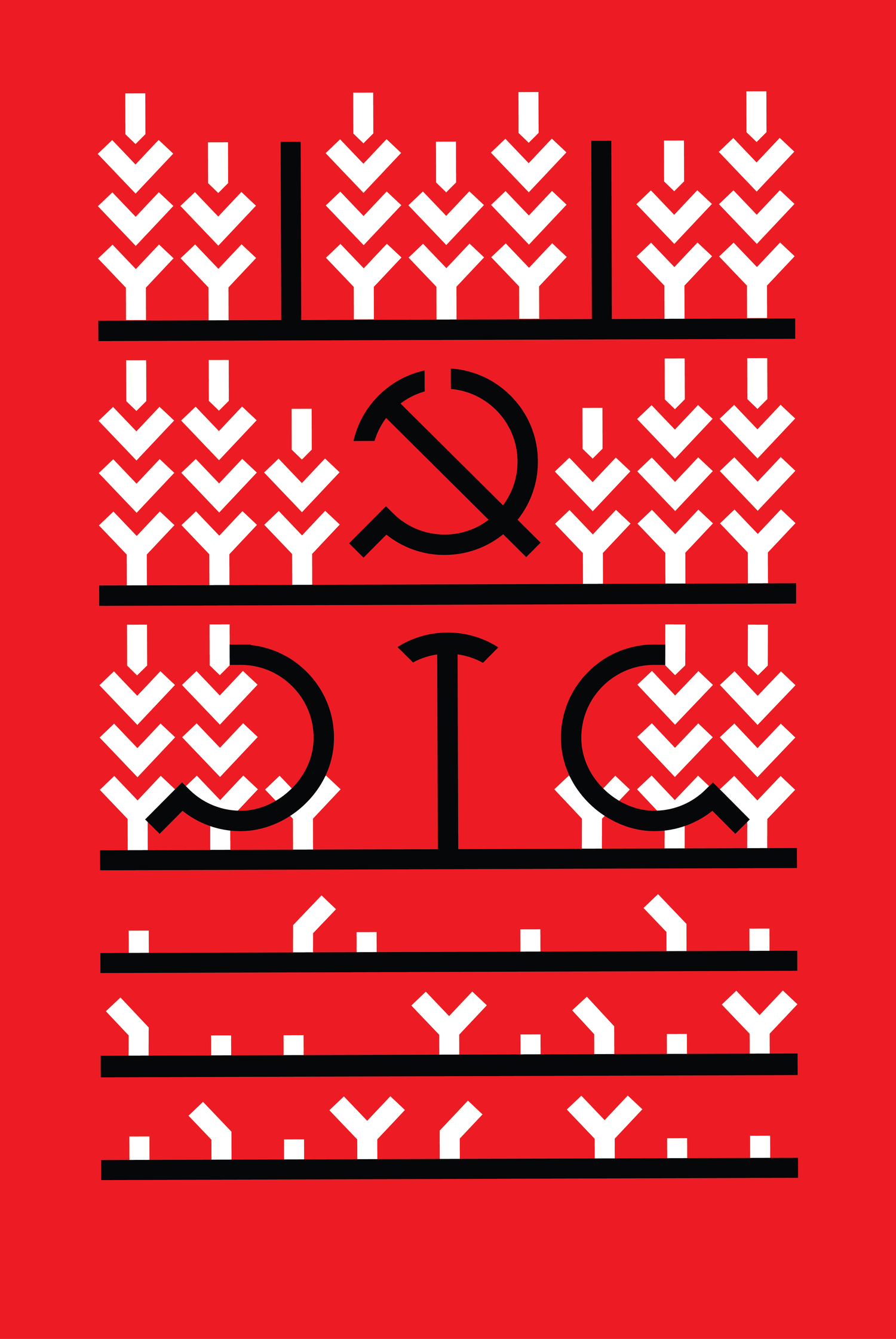
I. Occupation
Ukraine holds nearly one-third of the world’s black soil reserves, making its lands exceptionally fertile. On land this productive, famine could never have been a natural occurrence. Yet in the 1920s, Ukraine came under Soviet occupation, and in the early 1930s, the Soviet regime carried out a genocide by famine: the Holodomor.
-
The sequence begins with an abundance of wheat divided by fences, representing private land ownership in Ukraine before the Soviet occupation. It then shows the elimination of private property, as farmers are forced to surrender their land and join state-owned collective farms, where they work for the state for minimal compensation. The final part shows carelessly harvested crops, marking the beginning of the famine.
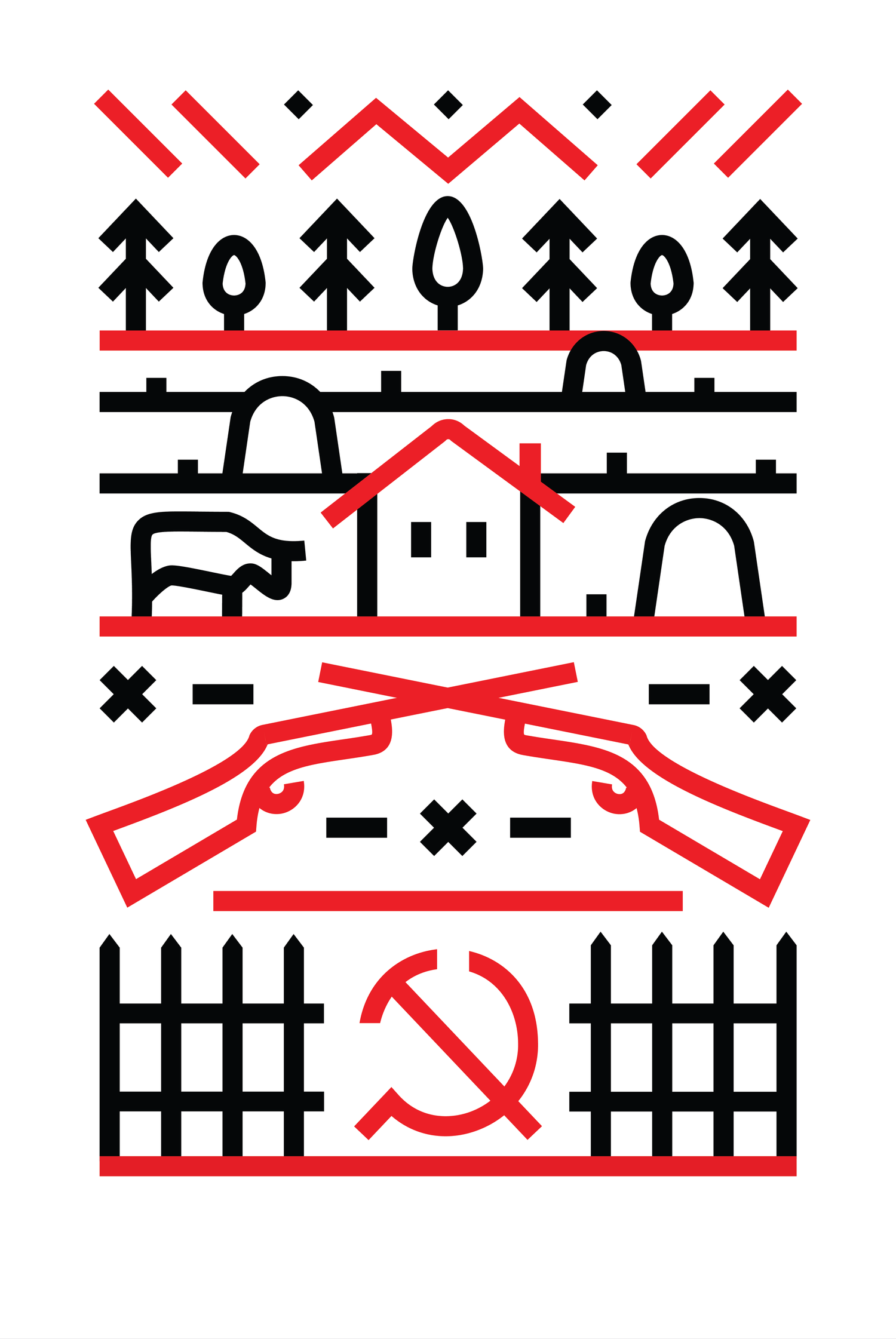
After years of working their own land, Ukrainians struggled to defend it as the Soviet authorities seized their farms, livestock, and property. They were forced into collective farms and made to work for the state for meagre compensation.
II. Oppression
-
At the time of the Holodomor, most Ukrainians lived in villages and depended directly on their land to survive. Soviet authorities began by targeting wealthier farmers, confiscating their land, livestock, and property through force. Many were arrested or shot on the spot. Soon, these arrests spread beyond the wealthy to anyone who fell under suspicion. Those labelled “enemies of the people” were arrested, deported, or killed by state forces.
Prosperous Ukrainians and eventually those who resisted collectivization were deported to remote areas of the Soviet Union, such as Siberia. Their property was confiscated, and they were packed into freight cars and sent thousands of kilometres from home, with little means of survival. Many died on the road or soon after arriving.
III. Deportation
-
Deportation was carried out under brutal conditions. The transport could last for weeks, with people packed into freight trains with little to no food or protection from the cold. Many died before reaching their destination. When trains stopped, the bodies of the dead were removed and left along the route. Those who survived the transport were often left at their destination with nothing to survive on.
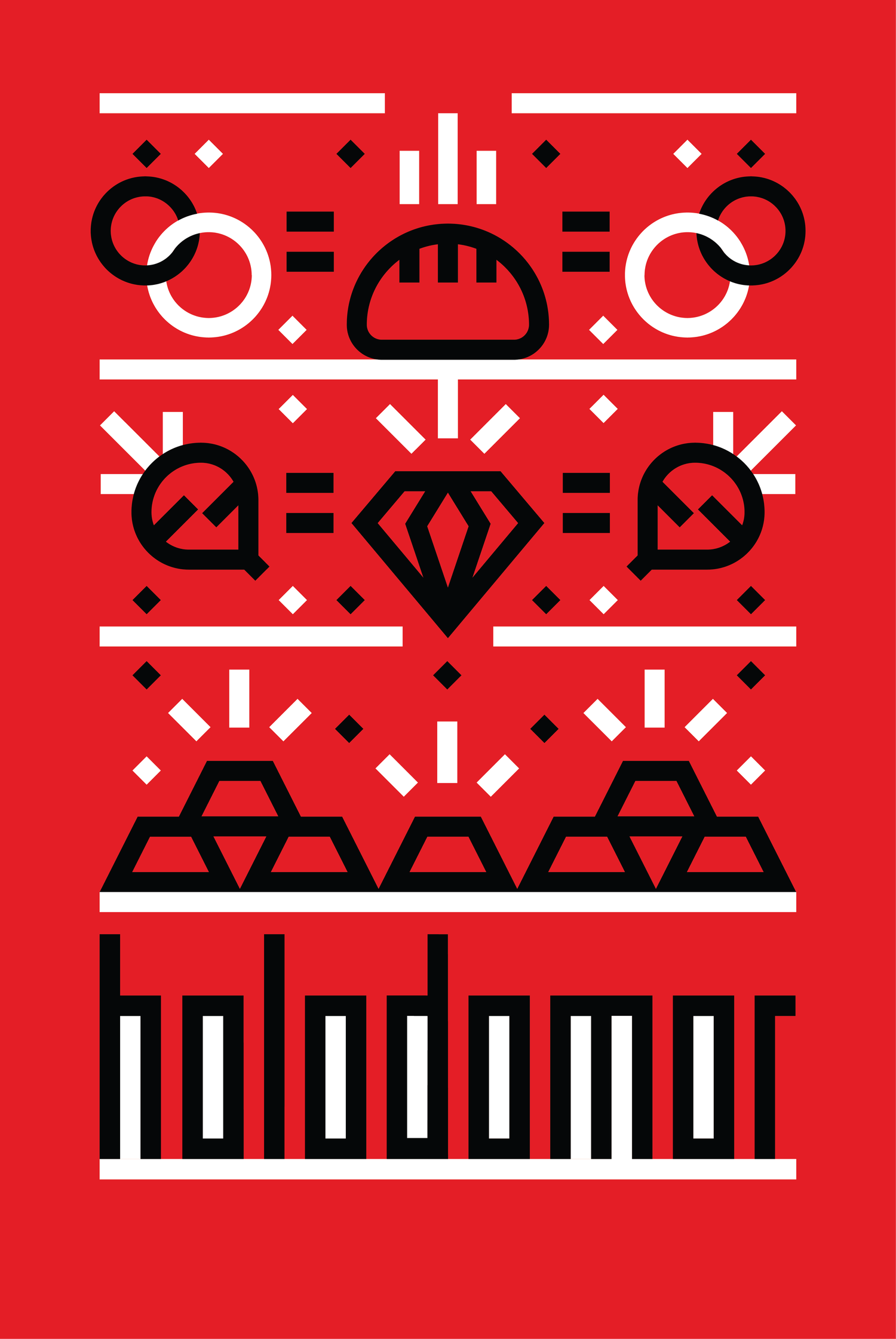
To confiscate family treasures, the Soviet regime created a network of stores called “Torgsin,” where starving people could exchange jewelry, heirlooms, and other precious possessions for meagre amounts of food. Through these stores, the Soviets seized the equivalent of about fourteen tonnes of pure gold from Ukrainians.
IV. Robbery
-
Torgsin became a mechanism for extracting wealth through hunger. Food was deliberately withheld until people were forced to exchange personal possessions for survival. The terms were heavily skewed. A 70-kilogram sack of flour cost 11 grams of pure gold. A tractor, the most expensive item available, was priced at two kilograms of gold. Over the course of the Holodomor, between 1932 and 1933, Torgsin stores seized more than eleven tons of gold from Ukrainians, much of it taken from people who were already starving.
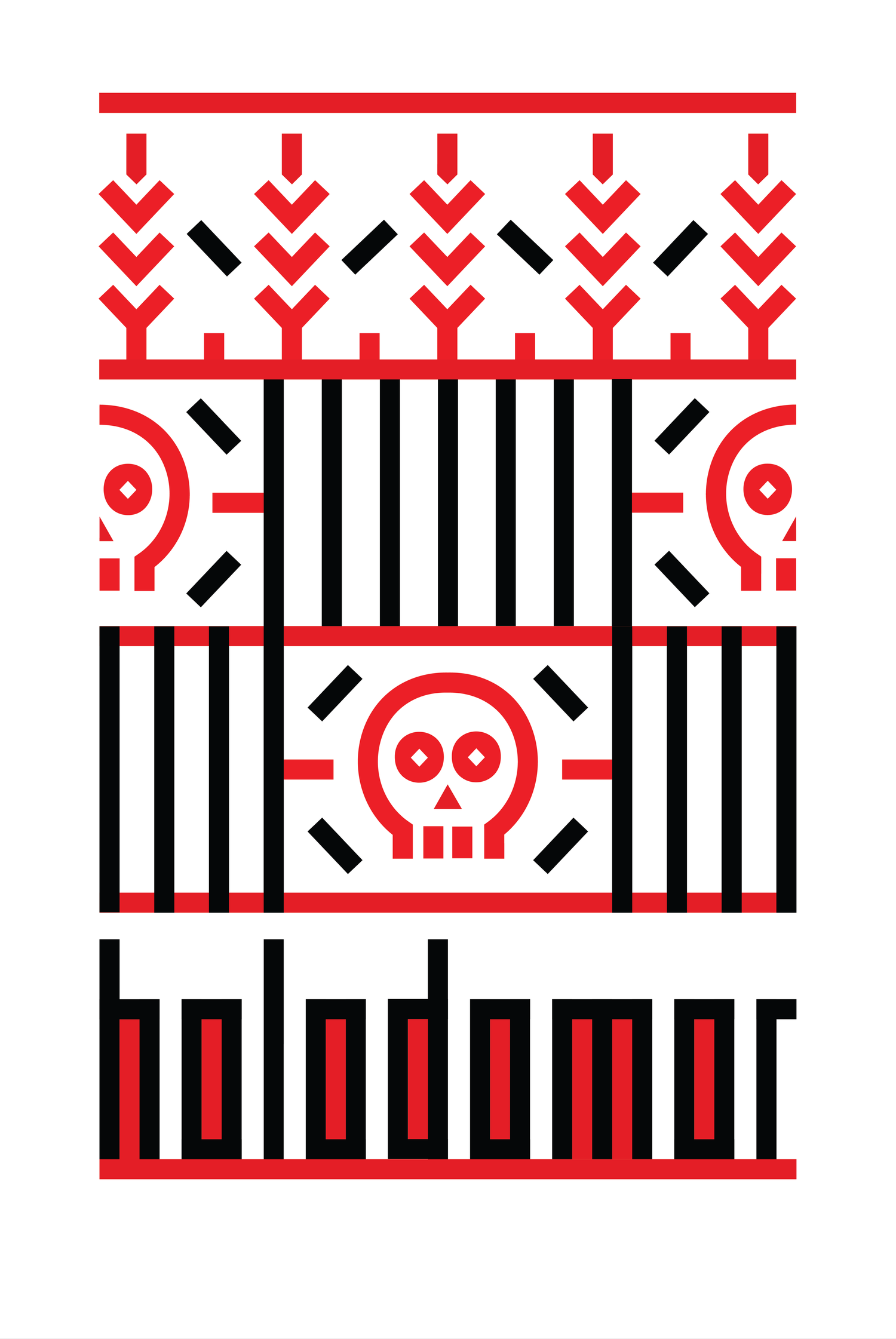
In 1932, the Soviets adopted a resolution known as the law of five spikelets. Anyone accused of collecting just a few ears of wheat or frozen potatoes from a collective farm’s fields was arrested or shot on the spot — even children.
V. Repression
-
This decree imposed punishments that were harsher than those applied to many other crimes at the time. Taking food from a collective farm was punished more severely than many violent crimes, including murder. While other offenses often carried limited prison sentences, the possession of food could lead to execution or long-term imprisonment. By elevating the protection of state property above human life, the law removed any legal space for survival.
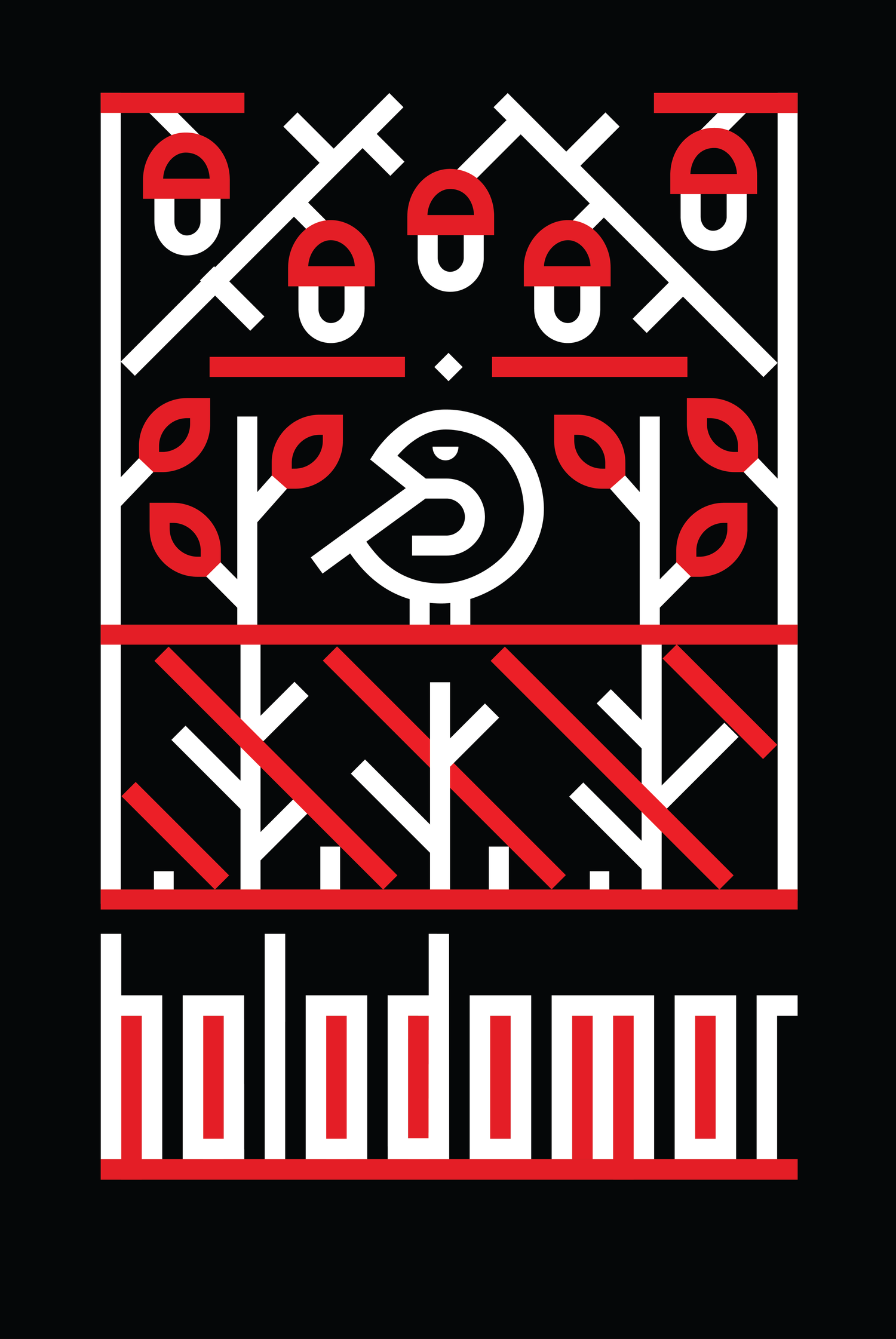
Ukrainian villagers were forbidden to travel to cities or other parts of the Soviet Union in search of food. Hungry and desperate, they ate tree bark, leaves, beetles, and birds.
VI. Isolation
-
Starvation was enforced by confinement. Villagers were denied internal passports, making it impossible to buy train tickets or leave their communities. This cut off access to cities, where food might still be found. Trapped in place, many were reduced to eating whatever they could find in their surroundings. Those who attempted to ge to cities of foot often died on the road, and those who reached the cities were often detained and sent back to die.
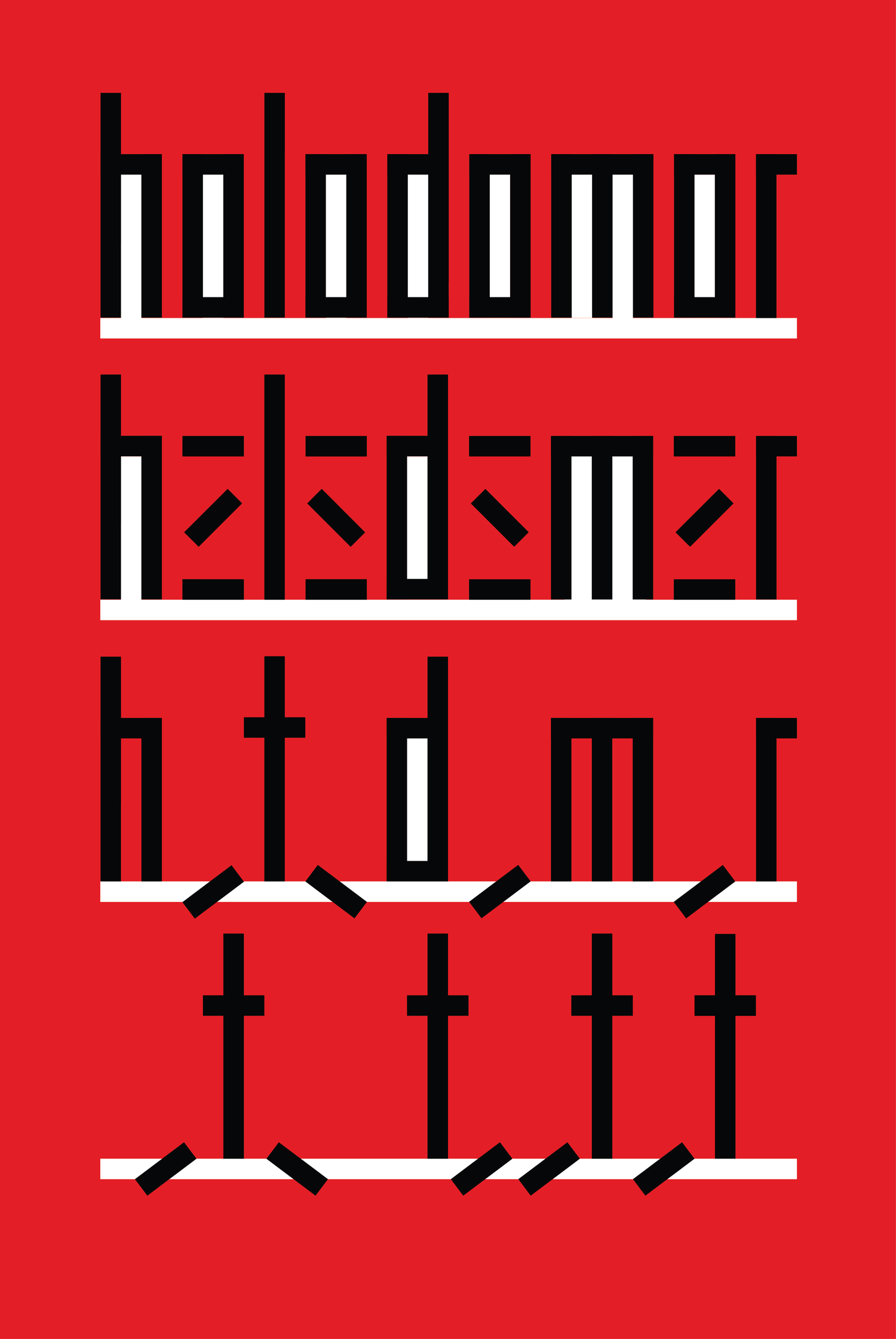
In June 1933, at the peak of the Holodomor, about 28,000 people died of starvation daily.
VII. Extermination
-
At the height of the Holodomor, death reached an unimaginable scale.
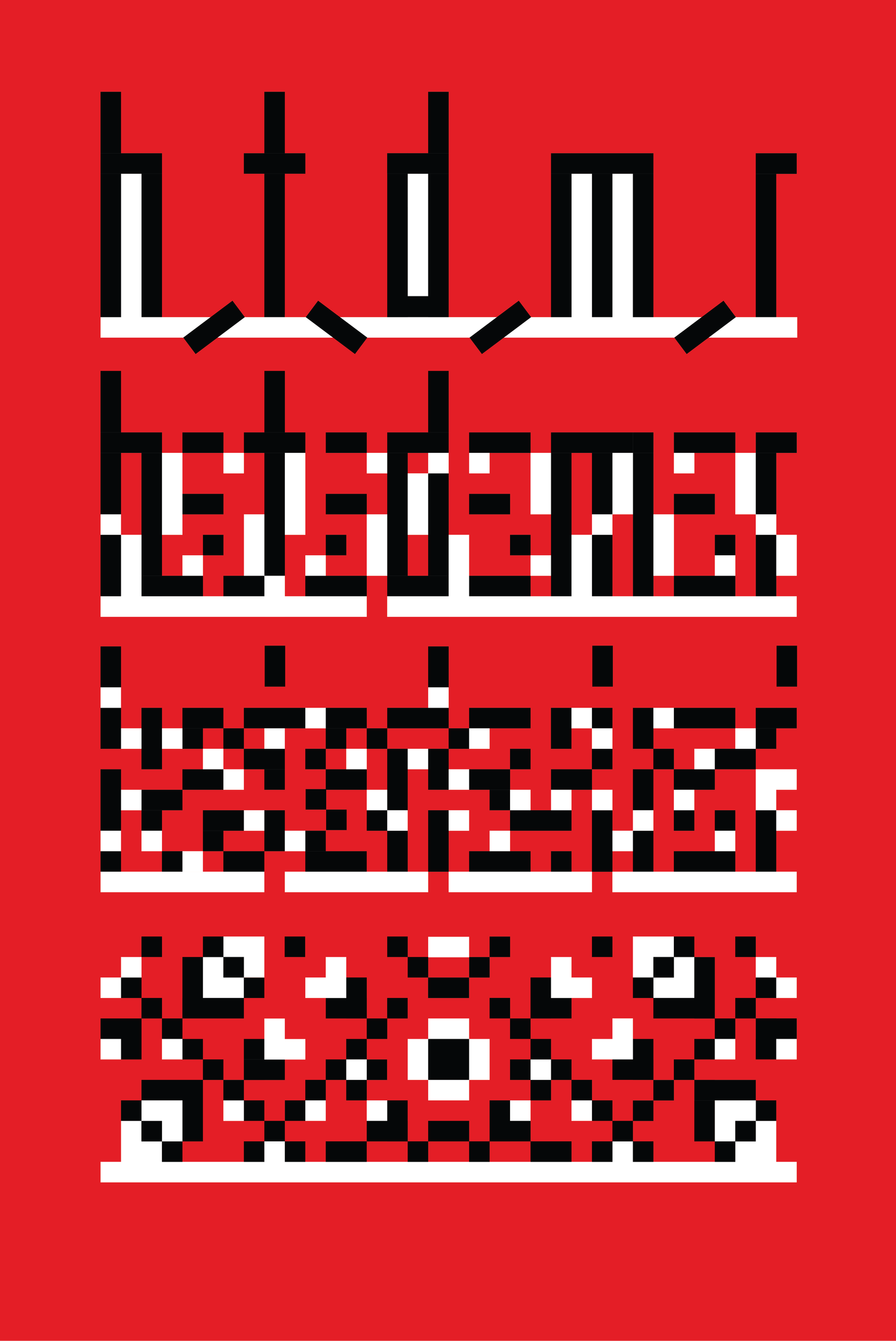
In this poster, the letters “O” first symbolize the windows of homes that held light, a sign of life. As the sequence unfolds, those lights go out, homes are emptied and boarded up, and eventually disappear altogether. What remains are villages erased by famine, turned into mass graves for those who were starved to death.
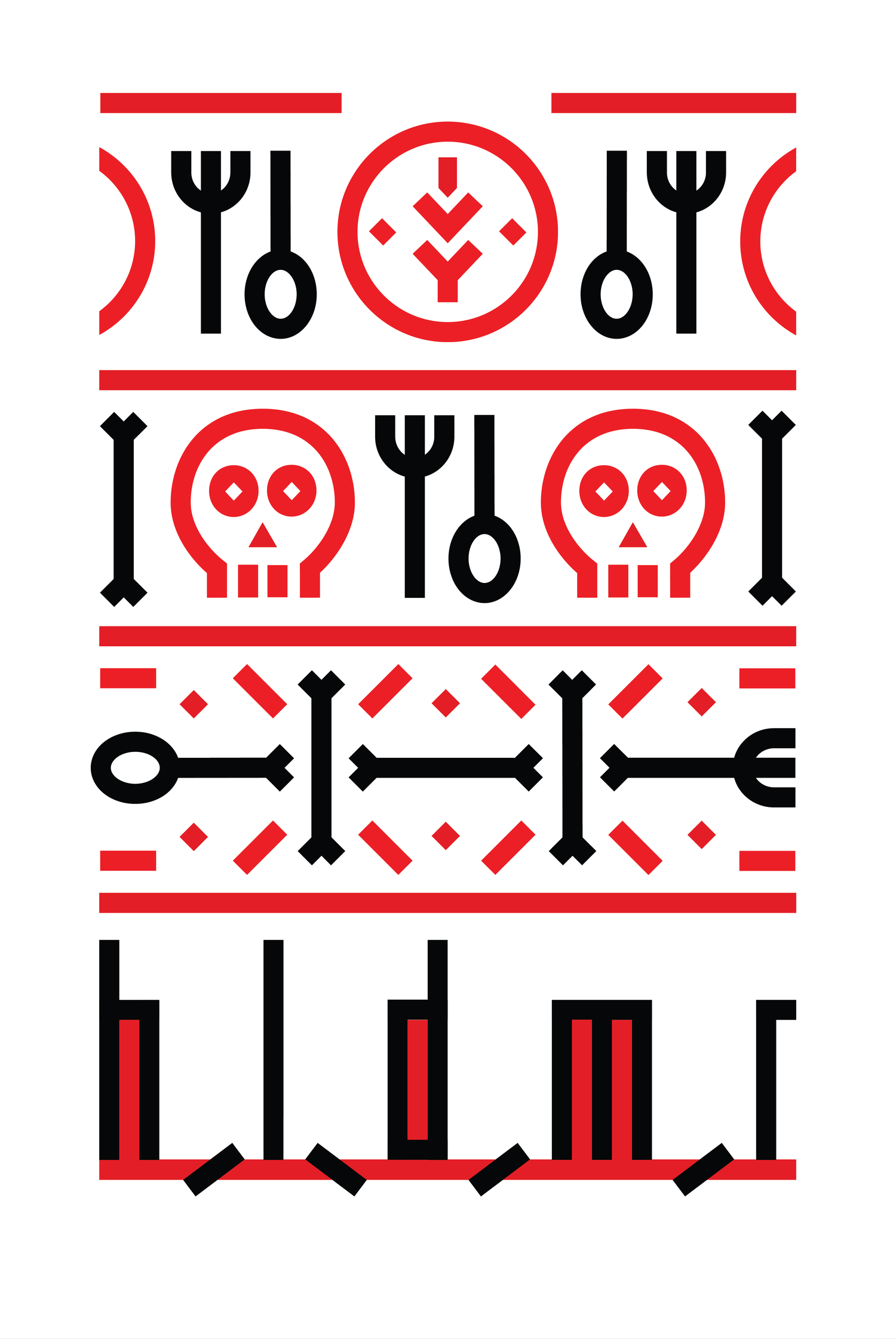
People dropped dead in the streets. The living, exhausted by hunger, picked up the bodies of the dead and carried them to burial. For this terrible work, they were given only a meagre amount of food.
VII. Devastation
-
People who were barely alive were forced into tasks that blurred any boundary between living and dying. Carrying the dead in exchange for food became one of the few remaining ways to survive. The scale of loss is reflected in the collapse of life expectancy. In 1930, it averaged 46 years for men and 52 years for women. By 1933, it had fallen to just 8 years for girls and 5 years for boys.
Among the millions who died during the Holodomor, a third were children under the age of ten. Future generations of Ukrainians were lost forever.
IX. Eradication
-
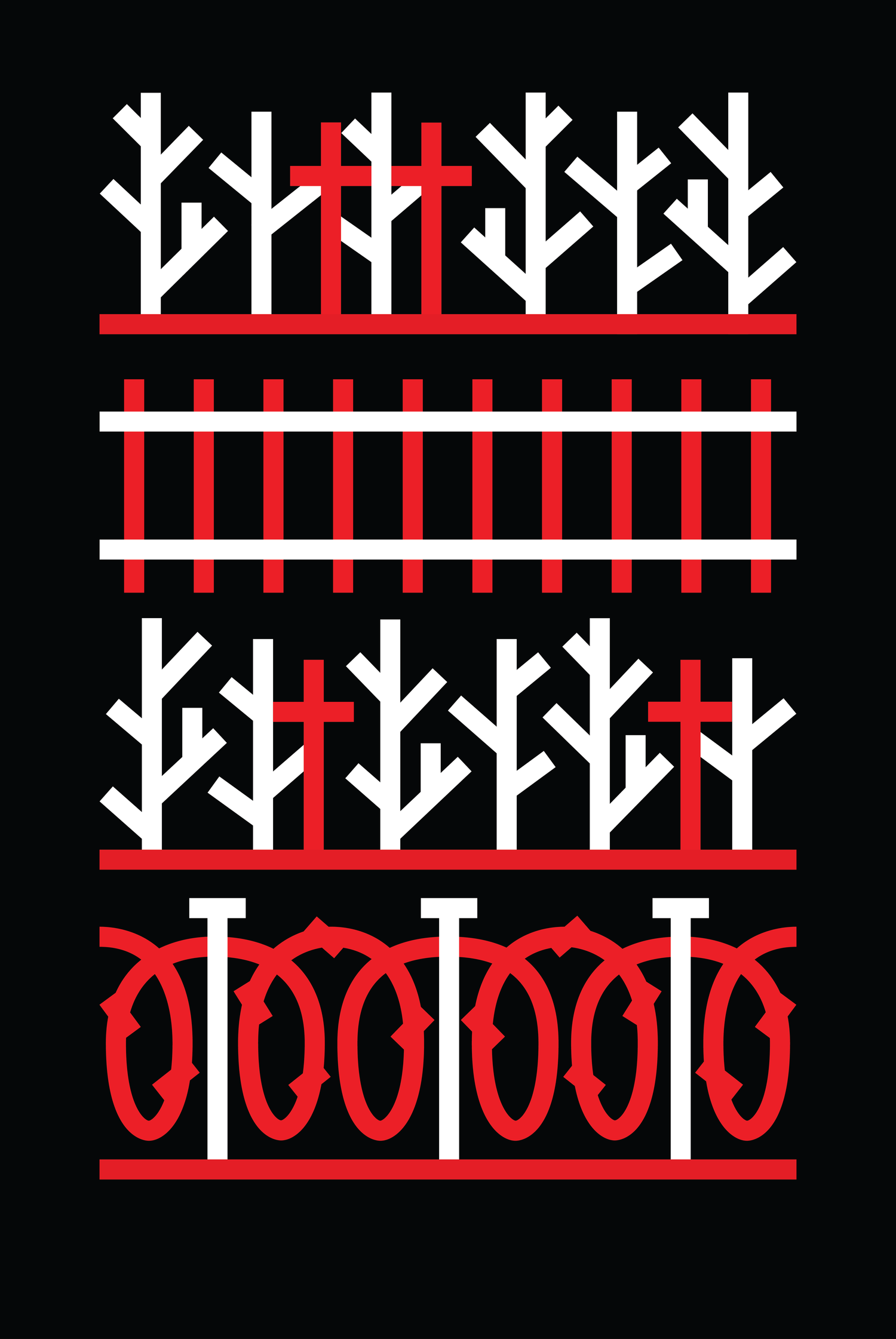
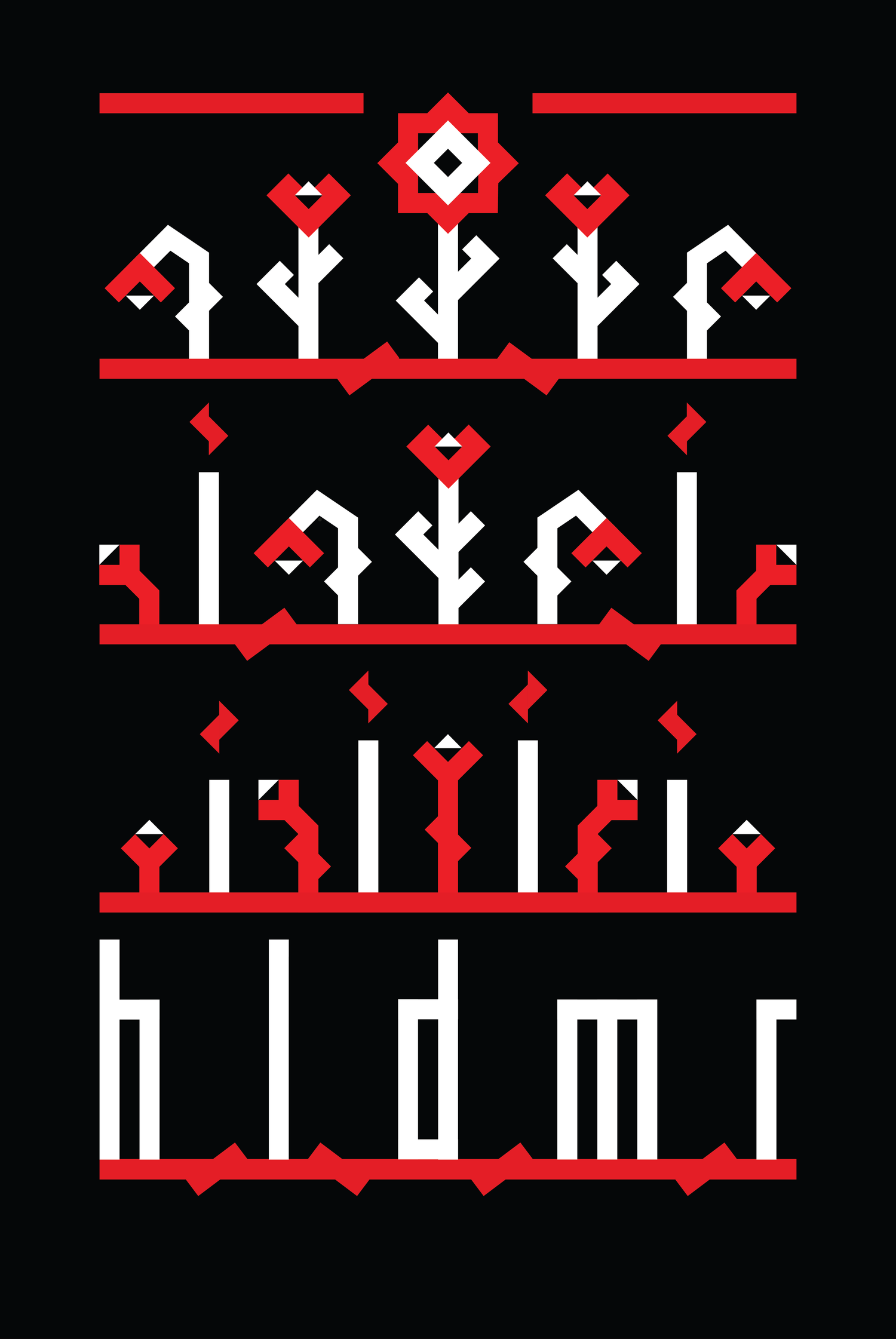
The lost generations are depicted on this poster as misshapen red flowers that never had the chance to grow. Those who survived are represented as white flowers, also misshapen and broken, marked by what they endured. Many survivors carried the trauma of the Holodomor into later life, passing it on to future generations, and many continue to live with its effects today.
The Soviets concealed the Holodomor from the world behind an Iron Curtain by spreading propaganda and intimidating witnesses. No one was ever punished for these crimes.
X. Denial
-
For decades, fear prevented people from speaking about what had happened. Many survivors carried the threat of punishment with them long after fleeing the Soviet Union. When investigations finally began in the United States in the mid-1980s, hundreds of survivors were identified, yet most refused to testify. Many were too afraid to speak at all, and those who did agree to speak often insisted on remaining anonymous. The silence surrounding the Holodomor was enforced so thoroughly that, even far from the Soviet state, fear continued to shape what could be said.
Learn more about this project
For a deeper look at the ideas behind this work, read the Q&A: Visual design and augmented reality expands the story of the Holodomor.
Curious how it came together? Explore the full creation process, from concept to execution.
Presentations and expositions
-
National Museum of the Holodomor-Genocide [Permanent Collection]
First exhibited in 2023
Kyiv, UkraineNational Library of Ukraine for Children
2023
Kyiv, UkraineMuseum of Ostroh Academy [Permanent Collection]
First exhibited in 2023
Ostroh, Rivne Oblast, Ukraine -
Ukrainian-Canadian Cultural Society of Vancouver Island
2025
Victoria, British ColumbiaUniversity of Victoria [Permanent collection]
First exhibited in 2025
Victoria, British ColumbiaRoyal Roads University Learning & Innovation Centre
2025
Victoria, British ColumbiaThe Ukrainian Cultural and Educational Centre – Oseredok [Permanent collection]
First exhibited in 2024
Winnipeg, ManitobaThe Embassy of Ukraine in Canada [Permanent collection]
First exhibited in 2024
Ottawa, OntarioCarleton University
2024
Ottawa, OntarioUniversity of Ottawa
2022
Ottawa, Ontario -
Johannesburg Holocaust and Genocide Memorial
2025
Johannesburg, GP, South Africa
Durban Holocaust & Genocide Centre
2024
Durban, KZN, South AfricaCape Town Holocaust & Genocide Centre
2024
Cape Town, WC, South AfricaUkrainian Association of South Africa [Permanent Collection]
First exhibited in 2024
GP, KZN, W/E Cape, South Africa -
Boston City Hall
2024
Boston, MassachusettsUniversity of Notre Dame [Permanent collection]
2020
South Bend, Indiana -
Tigre Town Council
2024
Tigre, Buenos Aires, ArgentinaCafe Kyiv (Colosseum Berlin)
2024
Berlin, GermanyThe Embassy of Ukraine in Georgia
2023
Tbilisi, Georgia